Monday, 11 October 2010

Spies sent to foil plots in Delhi

A COTERIE of spies from Australia, Britain and the United States travelled to New Delhi to investigate terrorist threats to the Commonwealth Games, a British newspaper claims.

The Daily Telegraph quoted British and Indian ''security sources'' as saying that two dozen senior intelligence agents visited India.

The paper said they were investigating Lashkar-e-Tayiba, the Pakistani jihadi group responsible for the 2008 Mumbai attacks in which 166 people died, and an Indian group linked to them, Indian Mujahideen. An escalation of tension between India and Pakistan was of most concern.

Advertisement: Story continues below A spokesman for Attorney-General Robert McClelland would not comment on the report, but said there was ''a high risk of terrorist attack in New Delhi''.

''We continue to receive reports that terrorists plan to attack public places, including hotels and tourist locations in New Delhi, Mumbai and other major cities. Australian sporting organisations, individual athletes or tourists need to make their own decisions on whether to attend the Games.''

Resources

Lebanon arrests suspected Israeli spies

The Lebanese security forces arrest nine people suspected of spying for Israel, the country's army has said in an official statement.


The statement said the nine suspected spies were detained over the past two months, a Press TV correspondent reported on Monday.

The interrogation process with four of the suspected spies has been completed and they have been transferred to the judicial authorities, the statement said.

The remaining five are still being interrogated by the army, it added.

Lebanon has stepped up efforts to disband the spy groups working for the Israeli spy agency, Mossad.

More than 100 people have been arrested on suspicion of spying for Mossad since April 2009, including members of the country's security forces and telecommunications personnel.

AGB/AKM/MMN
Resources

Monday, 19 July 2010

‘Spy’ plans plight protest at PM door


GAJINDER SINGH
Chandigarh, July 18: A former Indian “spy” to Pakistan, who is jobless and cannot pay his medical bills, has decided to stage a sit-in outside the Prime Minister’s house to highlight the plight of secret agents in the country.

“I will try to sit outside Prime Minister Manmohan Singh’s residence to demand better conditions for our families. That is the least the government can do for us,” Balbir Singh said over phone from his home at Mahal in Amritsar.

Frail and in his 60s, Balbir had to give up his job as a night watchman last year after a heart ailment confined him to bed for months. His son Jaswant, 18, was forced to drop out of school and do odd jobs to run the home. So was his daughter Jaswinder, 17, who once dreamt of being a software engineer.

Balbir was apparently sent to Peshawar on a spying mission in the late sixties along with Kashmir Singh, who was freed from Lahore’s Kot Lakhpat jail in 2008 after prolonged legal proceedings. They were arrested on their way back to Lahore after their mission, Balbir claimed.

“We were arrested on June 19, 1974, on the outskirts of Rawalpindi. While Kashmir got the death sentence, I was sentenced to 10 years and released in 1986 along with some other agents. We were simply pushed into India by the Pakistanis from an area in Abohar,” he said.

Balbir claimed the Indian government had never bothered to care for its former spies or even acknowledge their existence. Although Kashmir Singh was accorded a hero’s welcome in 2008, felicitated by the Punjab government and given money and a plot of land, nothing similar has come Balbir’s way.

“We are only seeking a future for our children,” he said. “We have launched court cases demanding compensation, but have not been able to get any rulings in our favour. Lawyers say any legal endorsement will mean that the government engages in espionage. But there are countries who have accepted their spies.”

Balbir said he was trying to get other former spies to accompany him at the proposed sit-in outside the Prime Minister’s house. “We can even squat in Jantar Mantar to highlight our plight. There are many who are completely bed-ridden, some pull rickshaws to sustain their families.”

Balbir said that after Partition most secret agents had been hired through word of mouth, given language training and sent across the border on specific missions. “We used to mostly cross when people were busy with their prayers. Sometimes we were sent with no specific mission.”

Wednesday, 25 November 2009

Israel police 'arrest Mossad spy on training exercise'

24 November 2009
A trainee spy for Israel's secret service agency Mossad was arrested by Tel Aviv police while taking part in a training operation, media reports say.
The young trainee was spotted by a female passer-by as he planted a fake bomb under a vehicle in the city.

He was only able to persuade police he was a spy after being taken in by an officer for questioning on Monday.

The authorities have refused to comment on the story although Israeli media outlets have expressed their surprise

Mossad does not give uniformed police advance notice of training sessions
A trainee spy for Israel's secret service agency Mossad was arrested by Tel Aviv police while taking part in a training operation, media reports say.
The young trainee was spotted by a female passer-by as he planted a fake bomb under a vehicle in the city.

He was only able to persuade police he was a spy after being taken in by an officer for questioning on Monday.
The authorities have refused to comment on the story although Israeli media outlets have expressed their surprise.

'Just a drill'

Mossad does not tell local uniformed police about its training exercises.
The country's commercial Channel 10 said it hoped the agency's operatives were "more effective abroad", AFP news agency reported.
Niva Ben-Harush, the woman who reported the novice's suspicious behaviour to police, told Ynet News that 15 minutes after she made the call, Tel Aviv's port was closed and people evacuated.

She said police initially asked her to come with them and identify the suspect.
"But after a few minutes, they told me it was just a drill," she said.
Up to three agency employees were believed to have been suspended following the incident, Ynet reported.

It quoted the prime minister's office as saying it did "not respond to information about such activities undertaken by security agencies or attributed to them". (BBC)

Monday, 16 November 2009

Alleged Pakistani spy arrested

NEW DELHI: A Pakistani national allegedly involved in espionage activities has been arrested at the Indira Gandhi International Airport here by the Special Cell of the Delhi police. Several defence-related and sensitive documents have purportedly been seized from him.

The suspect, whose identity has been kept a secret in the interest of investigations, was about to board a flight to Dubai when he was intercepted by the Special Cell sleuths on Thursday, following a tip-off by Central intelligence agencies. They checked his passport, purportedly issued from Lucknow, and found that it was obtained fraudulently.

Subsequently, he was interrogated in coordination with intelligence officials and Special Cell sleuths.

On checking his personal belongings, the police reportedly found several photographs and hand-drawn maps of an Air Force base near here and the Army’s Meerut Cantonment in Uttar Pradesh. Besides these, other security sensitive documents were also found, sources said.

Based on the findings, the Special Cell arrested the accused on espionage charges. During interrogation, he reportedlyclaimed that he was from Karachi in Pakistan. After being induced by Pakistan’s Inter-Services Intelligence to work as a spy against monetary compensation, he was trained and then sent to Nepal by air, from where he illegally entered the country through the porous Indo-Nepal border, sources said.

The accused disclosed that he had been staying in the Shahdara area of northeast Delhi for the past four years. According to sources, he managed to procure some identification documents — like a driving licence — showing him as an Indian citizen.

The police have so far not come across any evidence to suggest that the accused had earlier gone out of India through legal or illegal means. He remained in contact with his Pakistan-based handlers mostly through e-mail. He made calls using public telephones that are now being identified. Efforts are also being made to extract details of the e-mails sent by him.

The accused is being taken to different parts of U.P., including Lucknow, to identify the places he visited and also to track down his local contacts.

reported by Devesh K. Pandey (The Hindu)

Tuesday, 27 October 2009

J&K: Journalist held for spying

Jammu, October 27, 2009
The Jammu Police arrested a journalist working for a local news agency on charge of spying for Pakistani agency Inter-Services Intelligence (ISI).

Farroq Ahmad Ganai, who worked for The News Agency of Kashmir, allegedly lived a double life. To the outside world, he was hard-working journalist with a nose for news. However, according to the police, Ganai was actually a spy working for the enemy.

He was also the editor-in-chief of a magazine, The Inner Voice. He had held the position for four years.

Ganai, who hails from Durru village in Anantnag, was taken into custody from his office at Jammu's Jewel Chowk on Monday. The police said he worked for Pakistan's field intelligence unit.

According to police, 42-year-old Ganai was spying for two years. He was living in Jammu for 20 years. He was arrested on a tip-off from the army's military intelligence.

Ganai worked as a strategic source for the ISI, passing on vital information. He allegedly passed on information about roads being built by the army, hydro-projects and railway tracks, bridges and potential targets in Jammu city.

Ganai had travelled to Pakistan on journalistic assignments and that is how he got in touch with the ISI. He allegedly used Internet to send information to his minders across the border. (Headlines Today)

'Indian spy' arrested in Pakistan


A man alleged to be an Indian spy has been arrested in Pakistan, a media report said on Tuesday.
This is the second arrest of an Indian spy in the last 48 hours. As per details, Rabi Gopal, 25, was arrested from Wagha border in the wee hours of Monday. Rangers’ personnel have claimed to recover important documents from his possession.

Earlier, another Indian secret agent named Giyan Chandar was arrested by the authorities from Kala Katai two days ago. It is also learnt that both the arrested were not carrying travel documents including passport.

The Rangers have handed over both the Indian agents to intelligence agencies for further investigation.The Pakistan Rangers on Monday swooped on the suspected spy from Wagha area near Bedian in Punjab province, the Daily Times reported.

Rangers sources said the man had been identified as Rabi Gopal. They added that "sensitive documents" and maps were seized from him.

The sources said Paal had no travel document or passport.(Source- Pakistani news papers)

Somali fighters execute 'spies'


Al-Shabab aims to topple the government and impose their own version of Sharia law in Somalia [EPA]
Gunmen from Somalia's al-Shabab fighters have publicly executed two young men they said had been spies for the government.

A senior member of the group in the port town of Marka said the teenagers had confessed.

They were executed in front of hundreds of people who were summoned to witness the event on Sunday.

"These two young men were involved in spying against our Islamic administration," Sheikh Suldan, an al Shabab official, told reporters in Marka 100km south of the Somali, capital Mogadishu.

"We have been holding them for three months. We investigated and they confessed."

Al-Shabab aims to topple the UN-backed government in Somalia and introduce its own version of Islamic law in the country.

Courts run by al-Shabab officials have ordered executions, floggings and amputations in recent months, mostly in the southern town of Kismayo, but also in districts of the Mogadishu held by the fighters.

Strict laws

The group have also banned movies, mobile phone ringtones, dancing at wedding ceremonies and playing or watching soccer.

Also on Sunday, al-Shabab closed ASEP, a local non-governmental organisation, in the town of Balad Hawa, near the Kenyan border and detained several of its members, according to local residents.

An al-Shabab source told Reuters news agency that the staff had also been accused of spying.

The US has said al-Shabab is a proxy force for Osama bin Laden's al-Qaeda group in the failed Horn of Africa state.

About 19,000 civilians have been killed in fighting since the start of 2007 while another 1.5 million have been forced out of their homes.

Which High-Profile War Correspondent Is a Spy?

Journalists are often accused of being spies. Military sources now say that one, currently working in a war zone, is in fact a real-life secret agent.

The sources, one recently retired and two current special forces soldiers (who did not want to be named for about 37 blazingly obvious reasons) have served in both Iraq and Afghanistan. In separate interviews they said that the correspondent has been blasted out of sticky situations by elite forces on more than one occasion, with loss of life, because of his military intelligence role. "We don't do that for just journalists," said one. "It's widely known [within the unit the source serves] that he is intelligence."

They did not know whether his employers are aware that the reporter moonlights as James Bond. They may not be - which is somewhat forgivable as he's probably a subterfuge professional. But one would assume his editors are curious as to why he gets extra care and attention from highly trained men with guns when he's in trouble. If there is some kind of tacit approval, it's a stupendous conflict of interest. Not to mention the extra risk the organization's other journalists on the ground would face if he was unmasked (which is the main reason we're keeping this item blind).

The fourth estate and the intelligence services have been linked before. (They're also connected because spies are well known for cutting eye holes in newspapers so they can secretly look at stuff while appearing to read.) If you've heard anything that corroborates, or indeed makes a mockery of, our information send it here. For example: maybe you've noticed that one of your colleagues turns up to work in an Aston Martin and rappels through a window to get to his desk.

As a bonus the retired soldier, a chatty fellow, also added that "Western governments" frequently circumnavigate their claim they don't negotiate with terrorists by hiring security companies to do it for them. A specialist for a firm that offers "K&R" – Kidnapping and Ransom expertise – confirmed off the record that the company had recently been employed in just such a capacity recently. He wouldn't specify which country. But I bet it's not Belgium.

Thursday, 3 September 2009

15 of History’s Most Notable Spies


Ethiopian Review

News Forum
Posted by Mehret Tesfaye | September 3rd, 2009 at 2:24 pm |

A career in espionage is easily one of the most coveted of all childhood fantasies, due largely to the unending stream of spy movies, comics, books, and real-life stories we’re inundated with growing up. While James Bond is at the top of everyone’s list, in reality things can be a bit different; spies come in all shapes and sizes, and range from honorable to just plain criminal. Some are remembered for their daring and others for their half-witted desperation and lust for money, but one thing rides certain throughout the disparate stories they tell: It takes guts to be a spy. While the greatest spies will, by virtue of their success, never be known to us, these are the 15 most notable spies in our recent history. Regardless of their final motives or original intent, they’ve all earned their own version of immortality by contributing to our unending fascination with the shadowy world they’ve walked.

Mata Hari

Born Margaretha Geertruida Zelle, Mata Hari is one of the most widely known names in history. Beautiful, scandalous, sexy and shrewd, this exotic dancer and courtesan is believed to have worked her way into the fabric of World War I as a double agent. Technically kept out of the fray by her Dutch citizenship at the time, she travelled between countries freely, and it wasn’t until a cracked German code was intercepted that she was pinned by French authorities for espionage. Doubt’s surrounded the entire affair ever since, but Mata Hari was executed by firing squad on these suspicions, and blamed for the death of 50,000 troops. She’s rumored to have said of herself, shortly before the end, “Harlot, yes, but traitor- never.”

Nathan Hale

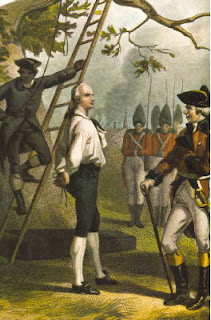
American folk hero and revolutionary war centerpiece Nathan Hale is widely regarded as the first American spy. He could be called the patron saint of the CIA, and a statue of his likeness watches over Langley, even today. He’s the man who said the oft-quoted line “I only regret that I have but one life to give my country,” which keeps him in the same story-book category of heroes as Ben Franklin and the rest of the cadre of world-changers from that epic era. Hale, then a Captain in the Continental Army, spent only about a week behind enemy lines during the Battle of Long Island, but in that time he cemented his place in history by earning the respect of even his executioners.

Sidney Reilly

Way back in the ancient times, before MI6 and the CIA, there was Scotland Yard. And from this old-timey British spy-hub, there was a man on a mission, and his name was Sidney Reilly. A Ukrainian born Jew, born Georgi Rosenblum, Reilly would come to be known as the Ace of Spies as he swaggered his way across Europe and Asia in the name of Crown and Country. His entire life was shrouded in mystery while simultaneously flaunted and recorded for posterity. He is the basis for Ian Fleming’s creation: James Bond. Amazing that today, we don’t come across this extraordinary man’s name unless we’ve got our noses buried in history books.

The Cambridge Five

You’ve undoubtedly heard the phrase (or an analog) “the fifth man.” There’s an origin for every phrase, and for this one there is a spy story. While only four of the original group were ever discovered and captured, the group was always known to be five members at its core, and the Cambridge Five made waves during the great red-scare at the end of the second World War and into the 1950’s by spying for the Soviets in the UK. The four known masters of this spy ring were Anthony Blunt, Donald Duart Maclean, Kim Philby and Guy Burgess, showed above from the left and clockwise. The group was well placed in Royal SIS circles and even had posts in the USA. They were ratted out to be part of a ring of five men by then-fellow KGB operative and defector Anatoliy Golitsyn in 1961.

Aldrich Ames

Another double agent, Ames worked counter-intelligence for the CIA – a post he used to give up the names and locations of every American operative in range of the KGB. He was grabbed in 1994, along with his wife, when the FBI finally called shenanigans on his outrageous spending habits. He had been living the life of a rich man on a $60,000 a year salary, while his wife had been racking up $6,000 phone bills every month. He may not have been the most intelligent spy when it came to covering his tracks in the public sphere, but he did manage to pass an extensive polygraph examination at the height of his scrutiny, twice. Today, Ames is serving life in a federal prison, while two million dollars sits in an undisclosed bank account waiting for his unlikely release. Over two million more has already been seized by the US government.

Christopher Boyce & Andrew Daulton Lee

More widely known as “the Falcon and the Snowman,” Boyce and Lee were an unlikely duo that formed out of convenience and managed to punch a serious hole in the USA’s national security through their lo-fi efforts on behalf of the Soviet Union back in the 1970’s. Boyce was working for an aerospace company on contract with the US government at the time, and was given top-secret clearance. When he began collecting the information he “accidentally” came by, he decided to make a move on it. He started trafficking the intelligence through his friend, Lee, a drug-runner, through Mexico to the Russian embassy there. It wasn’t until his friend was later arrested by the Mexican police on an unrelated charge that a microfiche was discovered, and their jig was up. Boyce was captured some years later, after a string of bank robberies used to fund his endeavors to become a pilot so he could fly to Russia.

Robert Hanssen

Among the same ranks as Aldrich Ames, Hanssen was an FBI Agent who spent two solid decades spying for the Soviets and Russians before he was caught in 2001 to massive media attention. In fact, one of the most key pieces of information Hanssen ever leaked was only acted upon by his Soviet employers when Ames provided confirmation, leading to the execution of a Russian General who had successfully spied for the Americans for 20 years. Hanssen made millions in his spy role, beginning just three years after his first post with the FBI, and continued on to be the most successful of his peers until his luck finally ran out. Hanssen was no idealist, he stated himself that he only did it “for the money.”

Julius and Ethel Rosenberg

Making history by becoming the first civilians to be executed for espionage in the United States, the Rosenbergs had been accused and found guilty of divulging secrets of the atomic bomb to the Soviets in the early 1950’s. They were both put to death by the Sing Sing electric chair at sundown on June 19th, 1953 in New York. Scientists deplored their deaths, but they weren’t the only ones. Among others, Pablo Picasso and the Pope also condemned their executions. At the time there was great debate in certain educated communities as to whether the United States should have had a complete monopoly over nuclear weapons, and the Rosenbergs were a sympathetic case. They certainly weren’t the only ones trafficking this information, either. That being said, they kept their lips sealed through to the end.

Klaus Fuchs

Working concurrently to the Rosenbergs to get atomic bomb data to the Soviets, Fuchs was convicted in 1950 and sentenced to fourteen years imprisonment. They do things a bit differently in British courts, apparently. His confessions implicated a man who would just three years later become the chief witness against the Julius and Ethel Rosenberg. He is largely credited with playing the largest role of all spies in the USSR’s successful acquisition of nuclear bomb technology – at break-neck speed – something that had until that point baffled the American scientific and intelligence communities.

John André

Major John André was captured on a mission for British Secret Intelligence, in which he was attempting to purchase the surrender of West Point from American General Benedict Arnold. He’s been called the British Nathan Hale, and was compared to the American while in captivity. He was found to be so likable in this way that the American guards themselves befriended him.

Belle Boyd

She’s been called the “Cleopatra of the Secession,” and she gave information to Confederate General Stonewall Jackson during the war. Belle was turned against the Union army when a group of soldiers assaulted her mother and she was forced to fire upon and kill one in her defense. Since that moment, though she was later exonerated in court, she did not ever seem to get over the ordeal, and began eliciting information from the army officers using her feminine whiles. She would then ferry the information using slaves, as she was in Virginia at the time. Unlike most members of this list, Belle would die of natural causes in her old age while staying in Wisconsin.

Oleg Penkovsky

Known as “Agent Hero,” Oleg is credited with being responsible for the Cuban Missile Crisis. Oleg had been a Colonel in the Soviet GRU, and was supplying the Americans with information throughout the 1950’s and 1960’s. It was his information that allowed the analysts to find the silos and missile cargo in the low-resolution spy-plane photos. In 1963, he was tried and convicted of treason and espionage in Soviet courts, leading to his execution, though there is no known record of how this execution took place, but the old Russian way is a simple bullet to the back of the neck.

George Koval

Though he was born American, Koval was moved as a child and eventually resettled in Russia for an extended period. While there he was recruited and later sent back to the United States to acquire nuclear information, which he succeeded in doing. He went to school and secured a position as an engineer on the Manhattan Project, allowing him free access to boundless intelligence that he would report back to his Soviet overseers. After Koval’s death in 2006, (then) Russian President Vladimir Putin posthumously decorated him as a Hero of the Russian Federation.

Jonathan Pollard

Texan-born Pollard was sentenced to life in prison for espionage as a spy for Israel in 1987. He had been working as an intelligence analyst for the US Government. He worked for cash, diamonds, and heritage, and was even vouched for by Benjamin Netenyahu himself in an attempt to gain clemency or pardon after his capture. He was only discovered when a fellow employee had noticed him removing classified material from the work center.

Richard Sorge

A Soviet spy of the highest order, Richard Sorge is famed for his exploits during the second World War in both Germany and Japan. He was highly successful, but was ultimately captured by the Japanese and imprisoned there. In 1944, Sorge was executed by hanging in the prison he had spent the last three years of his life. During the Cold War, he and his likeness were ubiquitous icons of Soviet pride and nationalism due to his service and dedication throughout his career.

Deputy spy chief among 23 killed in Taliban blast

By RAHIM FAIEZ (AP) – 1 day ago

KABUL — A Taliban suicide bomber detonated his explosives as Afghanistan's deputy chief of intelligence visited a mosque east of Kabul on Wednesday, killing the Afghan official and 22 others.

The attack struck at the heart of Afghanistan's intelligence service and underscored the Taliban's increasing ability to carry off complex and targeted attacks.

The explosion ripped through a crowd in Laghman province just as officials were leaving the main mosque in Mehterlam, 60 miles (100 kilometers) east of Kabul. Two top provincial officials from Laghman were among the dead, and the blast destroyed several government vehicles.

A Taliban spokesman said a suicide bomber on foot targeted Abdullah Laghmani, the deputy chief of Afghanistan's National Directorate for Security. The spokesman for Laghman's governor, Sayed Ahmad Safi, confirmed Laghmani was killed.

The National Directorate for Security, or NDS, is headed by an ethnic Tajik, and the killing of Laghmani, a Pashtun, could further exacerbate ethnic tensions as the country counts the results of the Aug. 20 presidential election. With about half the results in, President Hamid Karzai, an ethnic Pashtun, leads Abdullah Abdullah, who is half Pashtun and half Tajik but is seen as a Tajik candidate.

The blast killed Laghmani, the executive director of Laghman's governor's office, the head of Laghman's provincial council, two of Laghmani's body guards, and 18 civilians, said Sayed Ahmad Safi, the spokesman for Laghman's governor.

U.S. troops cordoned off the blast site, right outside Mehterlam's main mosque, which sits in a crowded market area. Safi said Laghmani was visiting the mosque to discuss plans to rebuild it.

Taliban suicide attacks frequently target high-ranking government officials. Militants have warned Afghans for years not to work as government officials, teachers, or in the country's armed forces.

The Taliban is made up of ethnic Pashtuns, and the targeting of a top Pashtun security official could serve as another warning for Afghans to avoid government employment.

Taliban attacks have spiked the last three years and insurgents now control wide swaths of territory, momentum that forced President Barack Obama to send 21,000 additional troops to the country this year.

U.S. military officials may soon ask for even more troops to be sent to the country, but American public opinion is starting to turn against the almost eight-year war as U.S. troop deaths have reached an all-time high.

The National Directorate for Security suffered a second attack in the country's north. An intelligence officer kidnapped a few days ago by Taliban militants in Kunduz province was found Wednesday hanging from a tree on the outskirts of Baghlan city, said Kabi Andarabi, the provincial police chief.

In other violence, four militants were killed overnight when a roadside bomb the

Saturday, 8 August 2009

Peru's Defense minister denies alleged Peru espionage against Chile

Andina
August 3, 2009
Peru's Defense Minister Rafael Rey denied Sunday any participation of Peruvian Government in the case concerning Business Track, a company accused of telephonic and electronic interception to Chilean Army officers.

“I can ensure that the Peruvian Government has nothing to do with this,” he said after attending a Sunday mass which commemorated 30 years of APRA founder Victor Raul Haya de la Torre’s death.

Rafael Rey pointed out that he did not have official information and apologized for not making further comments, because he never talks about unofficial media reports.

On Saturday, Peruvian Minister for Foreign Affairs Jose Antonio Garcia Belaunde also denied that the Peruvian State has an espionage policy, noting that Business Track representatives must be subjected to investigation.

He added that drug trafficking and terrorism always represent danger, disagreeing with former presidential candidate Ollanta Humala, who days before said that Sendero Luminoso (Shining Path) and Tupac Amaru Revolutionary Movement (MRTA) do not represent any longer a danger for the country.

Friday, 15 May 2009

US 'spy' appeal begins


An Iranian court last night started hearing an appeal by US-Iranian reporter Roxana Saberi, who was controversially sentenced last month to eight years in jail on charges of spying for the United States.

Saberi's lawyer Abdolsamad Khoramshahi said after the hearing that the Tehran court is expected to deliver its verdict "this week - within days,'' and voiced optimism over her fate.

He said closed-door session was held in a "good atmosphere - we are hoping that fundamental changes will be made (to the sentence).''

He said he had asked the court to release Saberi on bail, but that "the court has not decided.''

US-born Saberi, 32, was last month sentenced by a revolutionary court in Tehran to an eight-year jail term for spying for Iran's arch-foe the United States, causing deep consternation in Washington and among human rights groups.

She was initially arrested in January reportedly for buying alcohol, an act prohibited in the Islamic republic, and has since been detained in Tehran's notorious Evin prison.

A pale and gaunt-looking Saberi, wearing a dark blue chador and white slippers, was brought to the Tehran courthouse by three guards for the hearing, which lasted about four hours.

Saberi, a former US beauty queen, had launched a hunger strike on April 21 in protest at her sentence, taking in only water or sugared water, but she ended it after about two weeks after being briefly hospitalised in the prison clinic.

The sentence against Saberi was the harshest ever meted out to a dual national on security charges in Iran, and was issued just weeks after US President Barack Obama proposed better ties with Tehran.

"They gave us enough time to present our defence. They also gave enough time to my client to defend herself,'' Khoramshahi told reporters after the hearing wrapped up.

Saberi's father Reza, who was at the courthouse but not inside the courtroom, also voiced optimism about the outcome of the appeal.

"For the time being we cannot judge, but we have lots of hope and we think that they'll give us a better and quicker answer.''

Iran's official IRNA news agency quoted judiciary spokesman Ali Reza Jamshidi as saying he believed the ruling by the appeal court's three-judge panel ``will be fair and lawful.''

"I cannot predict whether Saberi will be acquitted or the same verdict will be upheld,'' he said.

Foreign Minister Manouchehr Mottaki has said that Saberi's appeal would be looked at "with justice and compassion.''

The United States has dismissed the charges against Saberi as baseless and called for her release. Obama has said that he was ``especially concerned'' about Saberi as well as two other US women journalists being detained in North Korea.

Judiciary spokesman Jamshidi brushed off Washington's concerns, saying Saberi's case had "been treated according to law in the preliminary stage.''

"If you want to look at what America says and what other countries want and listen to other governments we have to then put down pen and paper and sit back,'' he said.

Iran, which does not recognise dual nationality, has said Saberi had continued working "illegally'' after her press card was revoked in 2006.

Saberi has reported for US National Public Radio, the BBC and Fox News, and has lived in Iran for the past six years.

AFP

Monday, 20 April 2009

Iran court to review Roxana Saberi's case


April 20, 2009 at 2:19 PM
TEHRAN, April 20 (UPI) -- Iranian-American journalist Roxana Saberi's espionage conviction will be reviewed expeditiously, the head of Iran's judiciary said Monday.
The ISNA news agency reported Ayatollah Mahmoud Hashemi Shahroudi, who runs the judiciary, announced through a spokesman that he had ordered the "careful, quick and fair consideration" of an appeal of the eight-year jail sentence imposed on Saberi, The New York Times said.

The announcement came a day after Iranian President Mahmoud Ahmadinejad urged the chief prosecutor in her case to review the matter.

Saberi, 31, who grew up in Fargo, N.D., and holds dual U.S. and Iranian citizenship, worked for National Public Radio and BBC. She was arrested in late January and sentenced to prison last week on charges of spying for the U.S. government.

Her father, Reza Saberi, said told the Times he was allowed to visit his daughter Monday for the third time in jail.

U.S. President Barack Obama said Sunday efforts would be made through diplomatic channels to ensure the journalist was treated properly. He also said he was certain she wasn't spying for the United States.

Meanwhile, Northwestern University's Medill School of Journalism in Evanston, Ill., announced Monday students will lead a rally Thursday to urge Saberi's release.

"The council felt we'd be remiss not to acknowledge this travesty," said Medill senior Shari Weiss. "We will march in solidarity with Roxana and journalists everywhere."

Saberi is a Medill alumna.

US Journalist 'Saberi' sentenced to 8 yrs in prison


By Edward Yeranian
Cairo
18 April 2009

American journalist Roxana Saberi, who was charged with espionage against Iran, has been convicted and condemned to eight years in prison, after being tried behind closed doors. The father of the dual national Saberi, who confirmed the verdict, also says that she was "tricked" into confessing.

The Iranian court sentenced American-Iranian journalist Roxana Saberi to eight years in prison.

The 31-year-old Saberi, who is a dual American-Iranian citizen, has reported for National Public Radio and the British Broadcasting Corporation and was arrested in January. She was charged with "spying for the United States," and put on trial Monday. The U.S. State Department has rejected the spy charges as "baseless." U.S. Secretary of State Hillary Clinton said Saturday she was disappointed by the sentencing and said the U.S. government would continue to raise concerns to the Iranian government.


Saberi's father Reza Saberi confirmed the sentence against his daughter, and argued that she had been "tricked" into confessing to what he called, "bogus charges." Her attorney says that he will appeal.

Reza Moini, of Paris-based Reporters Without Borders, says that his organization is protesting what amounts to a "sham" trial and that the charges don't even correspond with Iran's own penal code.

Moini says that the condemnation doesn't correspond with the definition of espionage in Iran's penal code, articles 501 and 502, and the charge of espionage doesn't fit Saberi's case, either. But, what's important, he argues, is that the court tried her behind closed doors so that she couldn't defend herself properly. The Islamic Republic, he says, has been using dual national journalists or scholars for six or seven years, now, to put pressure on other countries, especially the U.S.

Iran expert Ali Nourizadeh who runs the Center for Arab and Iranian Studies in London says that Iran has misread signals from the Obama administration that it will ignore Tehran's human rights practices, detaining Saberi and other dual nationals so as to win the release of Iranians it claims the U.S. arrested unfairly in Kurdistan, last year.

"The Iranian regime, at the moment, though the Americans invited them for talks, and Americans actually showed some leniency towards them by not mentioning the human rights issue in their statement," he said. "So, therefore, the Iranians took the message wrongly and they believe if they push and push, they can get their men released, those who were arrested in Erbil and Sulaimaniyah."

Nourizadeh insists that Saberi's case is political and that the Iranian government has no credible case against her.

"Roxana did not do anything wrong. She just did her job and she was doing it for several years and there was no complaint," he said. "But, this time they come just with the excuse that she didn't extend her license. Okay, she did not extend her license, and that would be punishable by a fine or three months imprisonment, not eight years."

The court ruling comes after recent diplomatic overtures by U.S. President Barack Obama to renew dialogue with Iran and after European Union foreign policy head Javier Solana invited Iran to a round table conference to discuss its controversial nuclear program.

Saturday, 18 April 2009

Taliban-style justice for alleged U.S. spies


Friday, April 17, 2009 2:08 PM

By NBC News’ Carol Grisanti and Mushtaq Yusufzai

ISLAMABAD, Pakistan – "I was given $122 to drop chips wrapped in cigarette paper at al-Qaida and Taliban houses," confessed 19-year-old Habibur Rehman, just before the Taliban shot him dead for spying for the United States. "If I was successful, I was told, I would be given thousands of dollars," he said.

In a video released last week by the Taliban as a warning to other would-be spies, Rehman recounted how he was recruited to spy on the Taliban in North Waziristan and drop small transmitter chips on specific targets to call in CIA pilotless drone aircraft.

"I thought this was a very easy job," Rehman said in the video before he was killed. "The money was good so I started throwing the chips all over. I knew people were dying because of what I was doing, but I needed the money."

VIDEO: Alleged Taliban spy confession

The chips transmit a signal to a satellite overhead. The drones, armed with Hellfire missiles, are controlled and remotely piloted by the CIA in the United States, according to Pakistani and western military analysts. Once the signal is received, the drone takes off from Shamsi air base in southwestern Pakistan and collects data and intelligence to attack the chosen Taliban and al-Qaida target.

A U.S. official, who spoke to NBC News on the condition of anonymity about the Taliban allegation said, "People should recognize this for what it is … extremist propaganda."

President Barack Obama has stated that he considers the drone program an effective tool to target al-Qaida sanctuaries in Pakistan’s tribal areas along the mountainous border with Afghanistan. Nine out of 20 wanted al-Qaida operatives, who were on a list drawn up by U.S. official last year, have been killed by drones using intelligence provided from chips planted by Pakistani and Afghan tribesmen working as spies.

Taliban says on to strategy
The top Taliban leaders believe they now have successfully infiltrated many of the spy networks operated by the U.S. and Pakistani military in North and South Waziristan – but not all.

"We used to watch these planes, but we had no idea they were chasing us and taking pictures of our activities," said a senior Taliban commander in North Waziristan, who spoke on the condition of anonymity.

"In the early days of our jihad, our training camps were visible and people would come and go. We were not so concerned about the security of our locations, but that is all changed now. We abandoned all our old camps and re-located to new places," he explained.

The commander, who is close to Hafiz Gul Bahadur, a top Taliban boss in North Waziristan, said that 40 training camps have been moved because their Afghan friends, working for the Americans in Afghanistan, tipped them off about planned U.S. attacks.

"They told us the Americans had gotten pictures of our whereabouts and of our training houses and were planning to attack us through these unmanned planes," the commander said.

The commander said that once the Taliban had foiled their original plans, the Americans started paying Pakistani and Afghan citizens to identify their secret locations.

Taliban-style justice
"Finally, with the help of our sources in the Pakistani and Afghan intelligence agencies, we detained two Afghan tribesmen, who after five days of interrogation by our men, confessed to spying for U.S. forces in Afghanistan. They revealed other names and then we knew there were entire networks of spies operating in our areas," he said.

"Finally we busted one network of spies after another," the commander said and named some Taliban militants in their ranks who were operating as Western agents.

"Mullah Omar recently outlawed beheading of these traitors," the commander added. "Now we shoot them with AK-47 rifles, but only after we are sure of the charges against them."

A senior government official in North Waziristan, who also spoke on condition of anonymity because he feared for his life, said the Taliban have recently executed more than 100 alleged spies in North Waziristan.

Mohammed Nasir, who owns a general store in Miranshah, North Waziristan's main city, said that everyone is scared to death the Taliban will arrest them as spies.

"There is non-stop killing now of people accused of spying," said Nasir. "The government has no control – so the Taliban pick up people and try them in their secret courts. It is impossible to prove one’s innocence."

Before he was shot to death, Rehman said he did not know that he was spying for the United States, he just did it for the money. "I was told that if I could put a chip next to an Arab house, then I would get $12,000," he said.

Courtney Kube, NBC News Pentagon producer, contributed to this report.

Tuesday, 14 April 2009

Trial of Iranian American journalist over


Behrouz Mehri / AFP/Getty Images
The dual U.S. and Iranian citizen has been in Tehran's Evin Prison since January and is charged with espionage.
Roxana Saberi has been in prison since January, accused of spying for U.S. intelligence. A judicial spokesman says she had her day in court Monday and can expect a verdict in the next three weeks.
By Borzou Daragahi
April 15, 2009
Reporting from Beirut -- The trial of an Iranian American journalist facing espionage charges is over and her fate rests in the hands of a judge who will deliver a verdict in the next three weeks, a judiciary official in Tehran told reporters Tuesday.

The spokesman for Iran's judiciary said 31-year-old Roxana Saberi, an American-born dual U.S. and Iranian national, had her day in court Monday.

"Apparently, the court has heard her final defense," spokesman Ali Reza Jamshidi told reporters, according to Iran's Mehr news agency.

Saberi is accused of collecting information from Iranian officials and passing it to U.S. intelligence services, authorities said last week. She and her lawyer, Abdul-Samad Khorramshahi, appeared Monday before a branch of Iran's Revolutionary Court, which tries politically charged crimes.

Iranian lawyers have frequently questioned the due process and transparency afforded defendants at the Revolutionary Court.

Jamshidi said the public and media would not be able to evaluate the evidence.

"Relevant documents exist in the case and the claimants can gain access to it in order to prepare their defense," Mehr quoted him as telling reporters.

Saberi was detained in January after living and working in Iran for six years as a journalist, at least two of them without accreditation. She was confined to Tehran's Evin Prison.

Her parents arrived in Tehran last week. A few days later she was formally charged with espionage, a weighty accusation that could mean years in prison for the Northwestern University graduate and former Miss North Dakota.

In addition to the Iranian contention that Saberi was a covert U.S. operative, analysts have described other possible explanations for the charges:

Journalists' work -- interviewing officials and sending reports -- might resemble espionage. Those monitoring her might have built up a body of circumstantial evidence, such as visits to embassies, ministries and calls to the U.S., that might appear to be spying.

Iran's domestic political scene can be vicious. One faction might be trying to use Saberi to undermine possible rapprochement with the U.S. by another faction.

Iran also might want a bargaining chip to trade for officials who have been arrested and held by the U.S. in Iraq as spies over the last few years.

daragahi@latimes.com

Friday, 10 April 2009

Dad in Iran till daughter free


Followup
By ALI AKBAR DAREINI

TEHRAN, Iran (AP) — The father of an American journalist charged by Iran with espionage called on Iran Thursday to free her and said in an exclusive interview with Associated Press Television News that he will not leave the country until she's released.

"I demand them to release my daughter as soon as possible so that she can return to her normal life and continue her job," Reza Saberi said. "I will stay here until she is freed."

Roxana Saberi has been living for the last six years in Iran, working as a reporter for such organizations as National Public Radio and the British Broadcasting Corp. The 31-year-old freelance reporter was arrested in late January.

A judge announced Wednesday that she had been charged with spying for the United States, a far more serious development than earlier statements by Iranian officials that she had been arrested for working without press credentials — and her own assertion in a phone call to her father that she was arrested after buying a bottle of wine.

An investigative judge involved in the case told Iranian state TV that Saberi was passing classified information to U.S. intelligence services.

"Under the cover of a journalist, she visited government buildings, established contacts with some of the employees, gathered classified information and sent it to the U.S. intelligence services," said the judge, who under security rules was identified only by his surname, Heidarifard.

"Her activities were discovered by the counter-espionage department of the Intelligence Ministry," Heidarifard said.

Reza Saberi said he and his wife recently visited his daughter in Evin prison where she's being held.

"We were allowed to visit her for about twenty minutes. We talked to her. She was spiritually better than before. However, she was physically extremely thin and weak but she said she eats now and is going to exercise. This gave us the hope that she will become better," Reza Saberi said.

Saberi will stand trial next week, the judge said, though he did not specify which day.

The journalist grew up in Fargo, North Dakota and is a dual citizen of the U.S. and Iran.

"She is certainly an American national. She also came to Iran and received an Iranian ID card and passport and according to Iranian law, she is Iranian too. She is actually a dual citizen," her father said.

Copyright © 2009 The Associated Press. All rights reserved.

Muslims fear FBI is spying in mosques

By Dan Herbeck

A coalition of Muslim-American groups claims the FBI has been planting counter terrorism spies in mosques in some U. S. cities. Last month, 10 Muslim-American organizations threatened to stop working with the FBI on outreach efforts in the Muslim-American community.

Dr. Khalid J. Qazi, president of the Muslim Public Affairs Council of Western New York, said he is concerned about the situation and hopes the FBI provides some answers soon.

“[Muslims] are asking questions, wondering if there are moles spying on mosques throughout the country,” Qazi told The Buffalo News. “People ask me about it, and I have to tell them the honest truth — that I don’t know if it’s happening.”

The controversy has been growing among Muslim-Americans since February, when an Irvine, Calif., fitness instructor named Craig Monteilh told reporters that the FBI paid him to infiltrate mosques in several communities in Southern California during an investigation conducted in 2006-07.

Monteilh, a former convict, told the Associated Press that FBI agents had picked him up every morning for two weeks and took him to a building in Los Angeles where he learned some Arabic and learned about Islam. After that, he said, he infiltrated several mosques as an FBI informer.

He claimed that Ahmadullah Niazi, 34, of Irvine, offered to help Monteilh attend a terrorist training camp in Yemen or Afghanistan. Niazi was charged last month with perjury, misuse of a passport and other federal crimes. The FBI alleged that he is related to a bodyguard for al-Qaida leader Osama bin Laden.

So far, the FBI has refused to confirm or deny reports that Monteilh had been hired to infiltrate mosques.

Qazi said the lack of a public explanation by the FBI is a concern to him and other American Muslim leaders who have been working with law enforcement agencies since the terrorist attacks of Sept. 11, 2001.

In January 2007, Qazi’s organization received a community leadership award from the FBI for maintaining a dialogue with law enforcement and for organizing public meetings on airline profiling, border policies and other issues.

“Those of us who are working proactively with law enforcement, the FBI needs to give us a reason for what happened in this case in California,” Qazi said. “So far, they are giving us no explanation, so we have nothing to tell people in our own community about what happened.”

Last month, the American Muslim Task Force on Civil Rights and Elections accused the FBI of “McCarthy-era tactics” that are “detrimental to a free society.” Qazi is a board member of the Muslim Public Affairs Council, which is part of the task force.

He said the Muslim Public Affairs Council asked the national FBI office last month for an explanation of what happened in the California case but so far has not received one.

Have federal agents ever infiltrated any mosque in Western New York?

Qazi said he does not know. “I think people in any religious faith would be upset if they felt they were being spied upon,” Qazi said.

Daniel Bodony, a Buffalo FBI spokesman, said he could not comment on the California case. But he said he was not aware of the Buffalo FBI office ever sending informers into a mosque, church or any other religious institution.

“Unless there was some specific criminal activity that we were investigating, which was going on inside the mosque or church, it is something we would avoid at almost all costs,” Bodony said. “We would never send informants or undercover agents into a mosque or church just to fish for information, or to infringe on any person’s First Amendment rights.”

But one law enforcement expert said the FBI might have legitimate cause to investigate activities at a religious institution.

“If they had information about someone at a mosque or church being involved with terrorism, they would have an obligation to investigate,” said Robert Heibel, director of the Institute for Intelligence Studies at Mercyhurst College in Erie, Pa.

Heibel, a retired FBI agent, noted that a man who spoke at a Lackawanna mosque was one of the main recruiters of the “Lackawanna Six,” the men who wound up in prison for taking part in an al-Qaida training camp in Afghanistan.

In 1995, Sheik Omar Abdel- Rahman, a Muslim cleric from New York City, was sentenced to life in prison for conspiring to destroy the U. N. building and other landmarks in that city.

Prosecutions also have targeted racist criminal gangs tied to churches, Heibel noted.

“Should the FBI give attention to potentially dangerous religious extremists?” Heibel said. “In a case like that, the agents aren’t targeting a religion. They’re targeting a potential lawbreaker.”

dherbeck@buffnews.com

Iran charges US 'spy' journalist


April 9, 2009
Iranian prosecutors have charged an Iranian-American journalist with spying, a move likely to further strain Tehran's relationship with Washington.

Hillary Clinton, the US secretary of state, said on Wednesday that the US was "deeply concerned" about the news and called for Roxana Saberi's immediate release.

"We are deeply concerned by the news that we're hearing," Clinton said. "We wish for her speedy release and return to her family."

Saberi has been held in Tehran's Evin prison since she was detained in January.

Clinton said that the US, which is embroiled in a long-running dispute with Iran over the country's nuclear programme, had asked Swiss diplomats in Tehran for the "most accurate, up-to-date information" on Saberi.

Accused of spying

Abdolsamad Khoramshahi, Saberi's lawyer, said that the journalist had been informed of the charges against her and was to appear in court next week.

Khorramshahi said he could not comment on the accusation of spying as he had not been allowed to see the legal papers.

Saberi, an American citizen whose father is Iranian, has lived in Iran for the past six years and has reported from Tehran for the BBC and for America's National Public Radio.

Iranian officials said at the time of her arrest that the US-born journalist was working in Iran with expired press credentials.

Hassan Haddad, Iran's deputy prosecutor for security issues, said that Saberi had confessed to taking part in espionage activities, Iran's English-language Press TV said.

"She has been charged and a branch of the Revolutionary Court is reviewing her case now," Isna, the Iranian news agency quoted him as saying, referring to the Iranian court that deals with security issues.

The judge in the case told Iranian state television: "Journalism for this accused ... was a cover to collect information and intelligence and transfer them to America's intelligence service."

The television gave only the judge's last name, Heydarifard.

'In good spirits'

On Monday, Saberi's parents, Reza and Akiko, who both live in the US, were allowed to visit their daughter for about 30 minutes at the prison in Evin - their first visit since she was detained.

The two said that "Roxana was in good health and in good spirits", Khoramshahi told the Associated Press news agency.

They have appealed to Ayatollah Ali Khamenei, Iran's supreme leader, for their daughter's release.

Last week Clinton said that the US had given a letter to Iranian officials during a meeting in Europe, seeking Iran's help in resolving the cases of Saberi and of two other Americans detained in Iran.

Tehran denies receiving any such letter.

Saberi's case is likely to be dealt with by a "revolutionary court", which usually presides over matters involving state security.

Under Iran's penal code, the crime of spying can carry the death penalty.